
Posted on Google
 Linda Weiss
Trustindex verifies that the original source of the review is Google.
We feel very fortunate to have found this company. I met with Mike regarding leaks in the basement. He assessed the entire house, gave me options and clearly explained the process. Everyone from Mike, to the secretary in the office to the workers were absolutely amazing. They did the work as promised, gave us a reasonable price, and left the place immaculate. We could not be happier with the results! This is a great family owned business. You can’t go wrong!Posted on Google rose smithThe work was done with the utmost professionalism and competence. The service representative was very thorough in examining the dehumidifier, air purifier and sump pump and provided any service needed including draining the pump.Posted on Google
 Craig TodaroMark took it upon himself to come to my home and examine my issue himself. He is knowledgeable not only in basement waterproofing, but also in land grading, excavating and several other adjacent topics. While it was concluded my issue was not foundation oriented, he did not hesitate to propose several other creative ideas to help address my issue. He has a great disposition, and I would not hesitate to recommend his services to others.Posted on Google
 Linda RussoI bought my house 24 years ago, and for 24 years I lived with water coming in to my finished basement. A few years back I hired another company to put in a French Drain System which never worked. As the storms got worse the water in my basement increased. Because of my previous experience I was hesitant to hire another company until I read about ACM and met Mark who was highly recommended by my Home Service Company. Mark spent about 2 hours explaining the process, and what was needed. In February 2025 ACM put a extensive French Drain System which included taking down the sheet rock walls, demoing tile and placing a membrane along the whole perimeter of the drain system. All of this work was completed in 3 days exactly what Mark said. The guys were professional, polite, and best of all they were careful to save my Radiant Heating System which was under the tile. Since the French Drain System was placed I have not had 1 drop of water coming into my basement. I am very grateful to Mark's ACM Company, and was able to refinish my basement without fear of water damage. I highly recommend ACM Basement Water Proofing to all who are having water problems with their basement.Posted on Google
 Maria LacosteACM Basement Waterproofing did an excellent job in my basement, no more water intrusion. The job was handled professionally and on time. I am happy to recommend them.Posted on Google
 William RothsteinI chose ACM because of their "Best of Long Island" award, and I'm glad I did. Mark's crew (led by Joe) installed an interior French drain and a sump pump in our basement. Six months later, we've had no problems with water. These guys know what they're doing.Posted on Google
 Links2282My wife and I would like to say thank you to Mark and his team for their excellent work installing a French Drain in our finished basement. For years we had to worry about flooding if we got a large amount of rain in a short time. The entire staff was totally professional. knowledgeable, competent and efficient. They were clean and caring and after each day they protected the whole worksite. Without a doubt, we would recommend them for all your basement waterproofing needs.Posted on Google
 Peter WebbI called acm after finding water in the basement. Mark answered the call and quickly helped diagnose the issue. He guided me to check baseboard and sure enough a broken valve was causing this leak. It's good to find someone to help a homeowner without rushing to take their money. It's good to find a honest business man

Basement Water Solutions


ACM Basement Waterproofing provides professional basement and crawl space mold testing throughout Long Island, including Nassau and Suffolk Counties. Rather than just running a test, we help homeowners understand what the results mean and whether the underlying moisture problem also needs to be addressed. Family-owned on Long Island for 30 years, we offer mold testing that can even be scheduled alongside a free waterproofing inspection.
We make it simple, affordable, and stress-free — with guaranteed results.
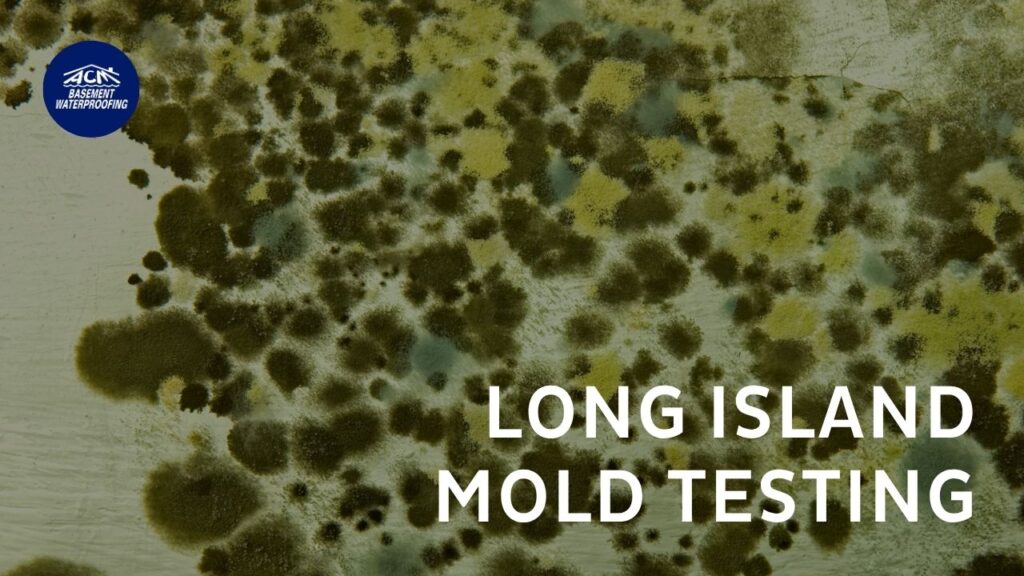
A musty basement doesn’t always mean visible mold, and visible mold isn’t always the whole story. Mold in a Long Island basement can affect your family’s health and, left unaddressed, the moisture behind it can affect the structure too. Because mold spores become airborne, some homeowners search for basement air quality testing when what they’re really trying to determine is whether mold is present, and air sampling is how you answer that question rather than guessing from a smell or a stain.
A few situations come up again and again when homeowners call us:
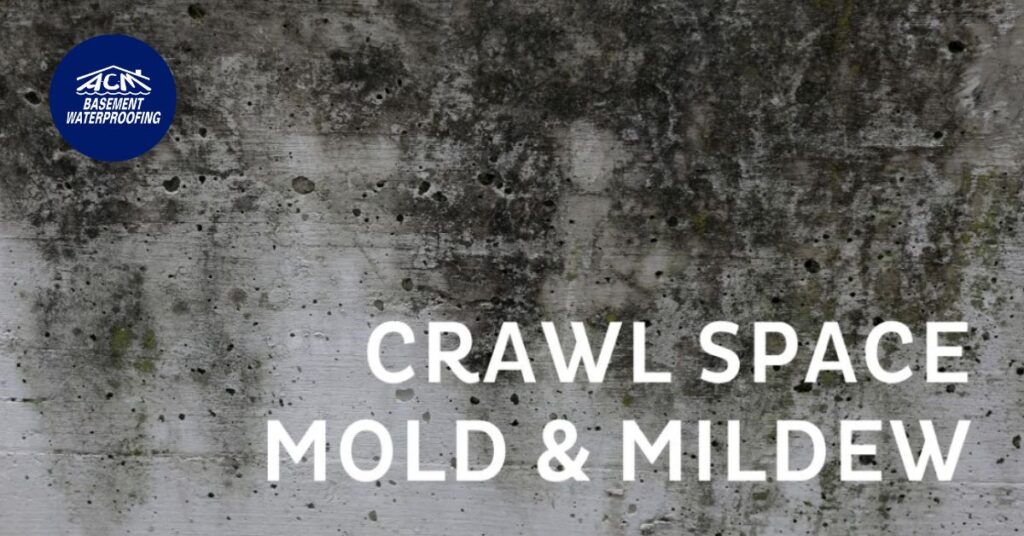
Mold needs moisture and something to feed on, and Long Island’s coastal climate keeps both in steady supply. With water on three sides, local humidity regularly climbs past 60%, the threshold most mold species need to actively grow, and it holds for months rather than just after a storm.
A mostly mid-century housing stock adds to it, since older plumbing and drainage throughout Nassau and Suffolk Counties predate today’s moisture barriers, leaving basements, crawl spaces, and poorly ventilated attics as the most common trouble spots.
The mold we see most often here falls into a few familiar genera, Cladosporium, Penicillium, and Aspergillus, all of which thrive in damp framing, drywall, carpeting, and HVAC components, with spore counts spiking during summer and after major storms.
We typically see basement mold trace back to chronic, low-level moisture rather than a single flood, groundwater seeping in slowly enough that nobody notices until the smell shows up or the drywall stains. Finished basements make it worse, since drywall, insulation, and framing all give mold something to feed on that an unfinished basement doesn’t offer in the same way.
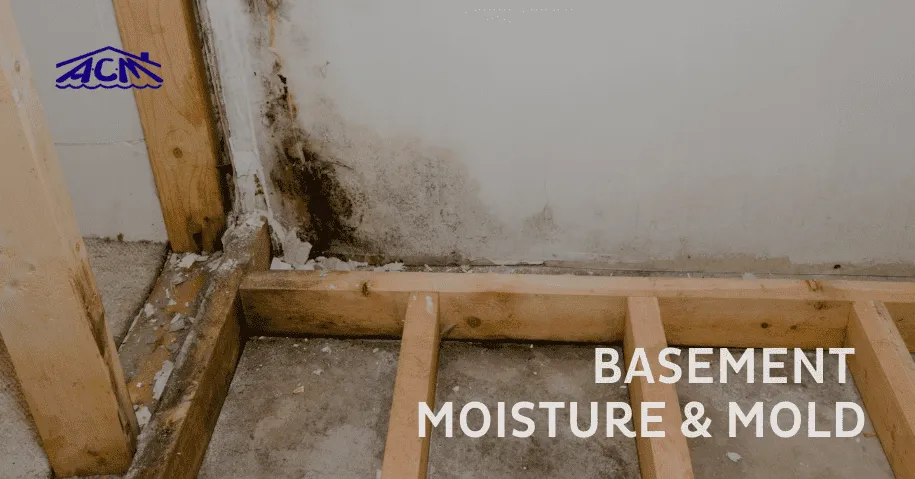
Our mold testing follows a consistent process, and it can be done at the same time as a free waterproofing inspection:
Mold testing identifies the types of mold present, their concentration, and whether levels are abnormal compared to the outdoor air in your area. What it doesn’t do is fix the moisture that’s causing the mold in the first place. A test result is a diagnosis, not a repair, which is why we always tie testing back to the water problem behind it rather than treating the test itself as the finish line.
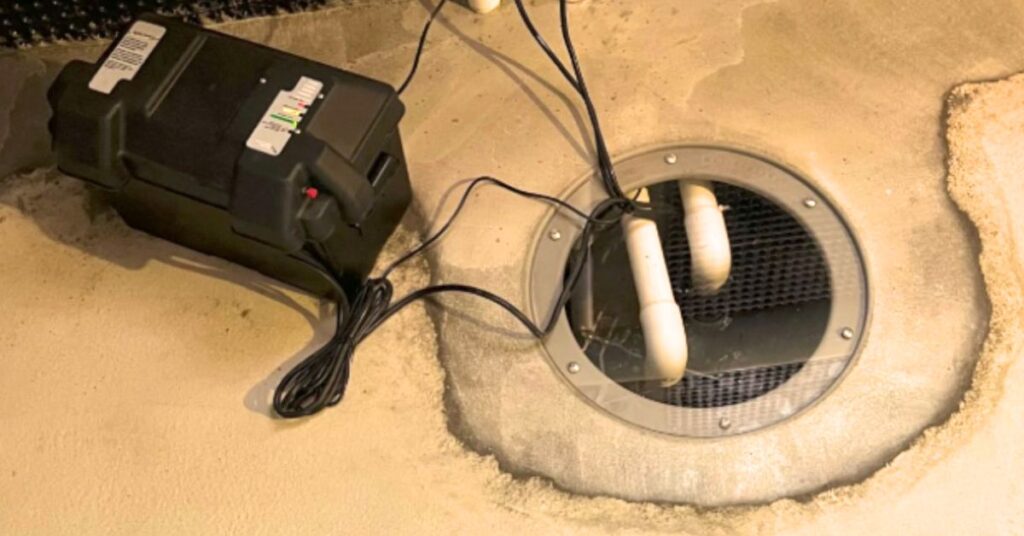
Mold remediation removes existing mold, but it doesn’t stop groundwater, leaks, or excess moisture from returning, so if the underlying conditions aren’t corrected, mold can start growing again in the same spot.
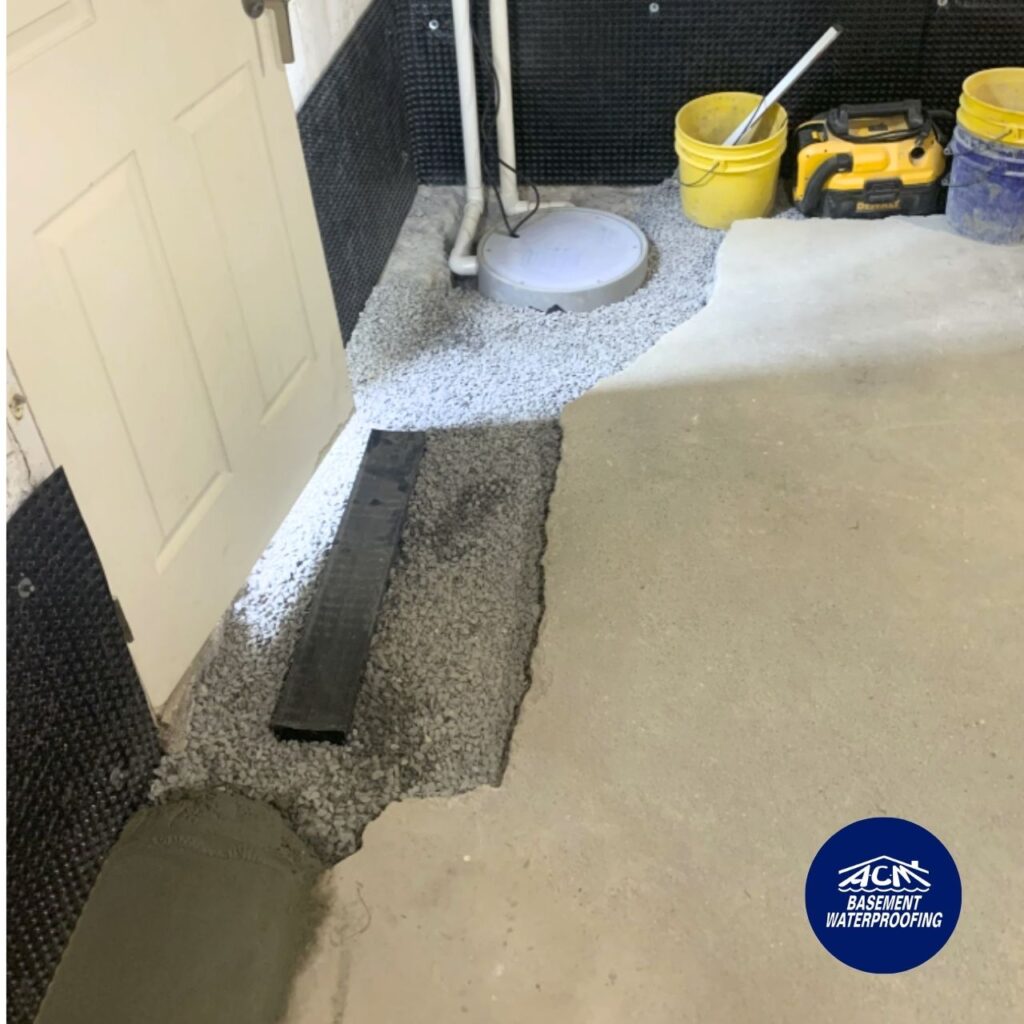
ACM Basement Waterproofing does not perform mold remediation. If testing indicates remediation is needed, that work should be completed first by a qualified remediation company. Once remediation has removed the existing mold, we identify and correct the moisture conditions that allowed it to develop in the first place, whether that’s groundwater, a leak, or poor drainage, helping reduce the likelihood of mold returning. Testing, remediation, and waterproofing each solve a different part of the same problem, and a lasting result usually depends on all three happening in the right order.
We make it simple, affordable, and stress-free — with guaranteed results.
Homeowners think: “It’s just a musty smell.”
We often find: elevated airborne mold spores caused by chronic moisture behind finished basement walls, well before anything is visible.
Homeowners think: “The mold is only on this one wall.”
We often find: moisture affecting a much larger section of the basement than what’s immediately visible, often tracing back to the same source.
Homeowners think: “We had it professionally removed, so we’re done.”
We find: in cases where the water source was never addressed, mold has already started coming back in the same spot.
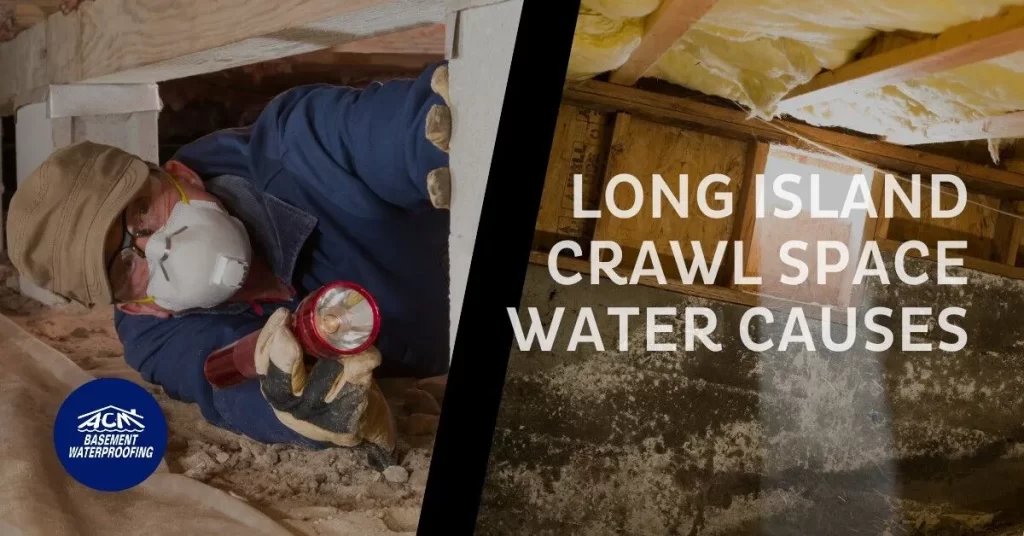
Every mold test we run pairs certified lab analysis with an outdoor control sample, so the results reflect what’s actually elevated indoors rather than a visual guess, and that data sits on top of 30 years of hands-on waterproofing experience on Long Island.
ACM is a member of the Basement Health Association, our team includes Certified Waterproofing Specialists (a credential that requires passing an exam on hydrogeology, construction, and safety, plus ongoing continuing education), and we’re one of only three companies in New York State to hold the BHA’s Star Award.
If you’ve been searching for basement mold testing near you, mold testing near me, or basement mold inspection in Long Island, ACM is based in Islip and serves homeowners throughout Nassau and Suffolk Counties. Testing can be scheduled on its own or alongside a free basement waterproofing inspection.
Is basement mold testing worth it?
Yes, especially if you notice a musty smell, visible growth, recent water damage, or you’re buying or selling a home. Testing replaces guesswork with an objective lab result.
How much mold is normal?
Some mold spores are present in outdoor air everywhere, which is why testing compares your indoor sample against an outdoor control. Elevated indoor levels relative to that baseline are the concern, not the mere presence of mold.
Can mold grow behind drywall?
Yes, and often for a long time before it becomes visible or noticeable by smell. Finished basements are particularly prone to this since the drywall itself is a food source.
Can mold return after removal?
Yes, if the water source causing it was never addressed. Removing visible mold without fixing the underlying moisture usually means it comes back in the same place.
Should I waterproof before mold remediation?
Generally, remediation comes first if active mold is present, since ACM doesn’t perform mold removal. Waterproofing follows to correct the moisture conditions that caused it, so the problem doesn’t return once remediation is done.
Is black mold the only dangerous mold?
No. Several types of mold can cause health effects, and individual sensitivity varies quite a bit from person to person. Testing identifies which types are actually present rather than assuming based on color.
How long does mold testing take?
Sampling itself typically takes under an hour, with the full lab report following within a few business days.
Can mold testing detect hidden mold?
Air sampling can pick up elevated spore counts caused by mold that isn’t visible yet, which is one of the main reasons to test a finished basement rather than relying on a visual check alone.
Do I need mold testing after a basement flood?
It’s worth considering, since flooded basements can develop mold within days, often before it’s visible.
What’s the difference between mold testing and a mold inspection?
A visual inspection looks for signs of mold and moisture. Testing adds lab-verified air sampling to confirm what’s actually present and how elevated it is, which a visual inspection alone can’t tell you.
Is basement mold different from crawl space mold?
The mold itself isn’t different, but the conditions often are. Crawl spaces tend to stay more consistently damp from direct ground contact, while finished basements trap moisture behind drywall where it’s harder to spot.
If you suspect mold in your basement or crawl space, don’t wait on it. ACM Basement Waterproofing offers reliable mold testing throughout Nassau and Suffolk Counties, backed by lab-verified results and decades of waterproofing experience. Contact us to schedule your test, and ask about pairing it with a free inspection to address the water problem behind it. For general background on mold and moisture, the EPA’s mold guide is a useful outside resource.
We make it simple, affordable, and stress-free — with guaranteed results.
*50% Off Materials Discount applicable to new projects over $10,000 *All financing is subject to credit approval. Your terms may vary. Payment options through Wisetack are provided by our lending partners. For example, a $5,500 purchase could cost $253.54 per month for 24 months, based on a 9.9% APR, or $1,833.33 per month for 3 months, based on a 0% APR. Offers range from 0 to 35.9% APR based on amount requested and creditworthiness. Not all merchants and lending partners participate in 0% interest programs. Terms range from 3 - 120 months and may vary based on merchant, lending partner, or transaction size. State interest rate caps may apply. No prepaid finance charges or participation fees. See additional terms at wisetack.com/faqs. Copyright © ACM Basement Waterproofing | All rights reserved. Privacy Policy