


 Trustindex verifies that the original source of the review is Google.
 Trustindex verifies that the original source of the review is Google.
 Trustindex verifies that the original source of the review is Google.
 Trustindex verifies that the original source of the review is Google.
 Trustindex verifies that the original source of the review is Google.
 Trustindex verifies that the original source of the review is Google.
 Trustindex verifies that the original source of the review is Google.
 Trustindex verifies that the original source of the review is Google.

 Trustindex verifies that the original source of the review is Google. Trustindex verifies that the original source of the review is Google. Trustindex verifies that the original source of the review is Google. Trustindex verifies that the original source of the review is Google. Trustindex verifies that the original source of the review is Google. Trustindex verifies that the original source of the review is Google. Trustindex verifies that the original source of the review is Google. Trustindex verifies that the original source of the review is Google.
Basement Water Solutions

Horizontal basement wall cracks are one of the most serious foundation warning signs a Long Island homeowner can face. Unlike small vertical or hairline cracks, a horizontal crack usually means your wall is under pressure and starting to bend inward in your Long Island home. Left alone, this can lead to structural damage, water problems, and repairs that only get more expensive the longer you wait.
Homes in Suffolk County and Nassau County are especially at risk because of Long Island’s soil conditions, high water table, and seasonal rainfall. If you’ve spotted a horizontal crack in your basement, it’s worth getting a professional opinion from a Long Island foundation repair company sooner rather than later.
We make it simple, affordable, and stress-free — with guaranteed results.
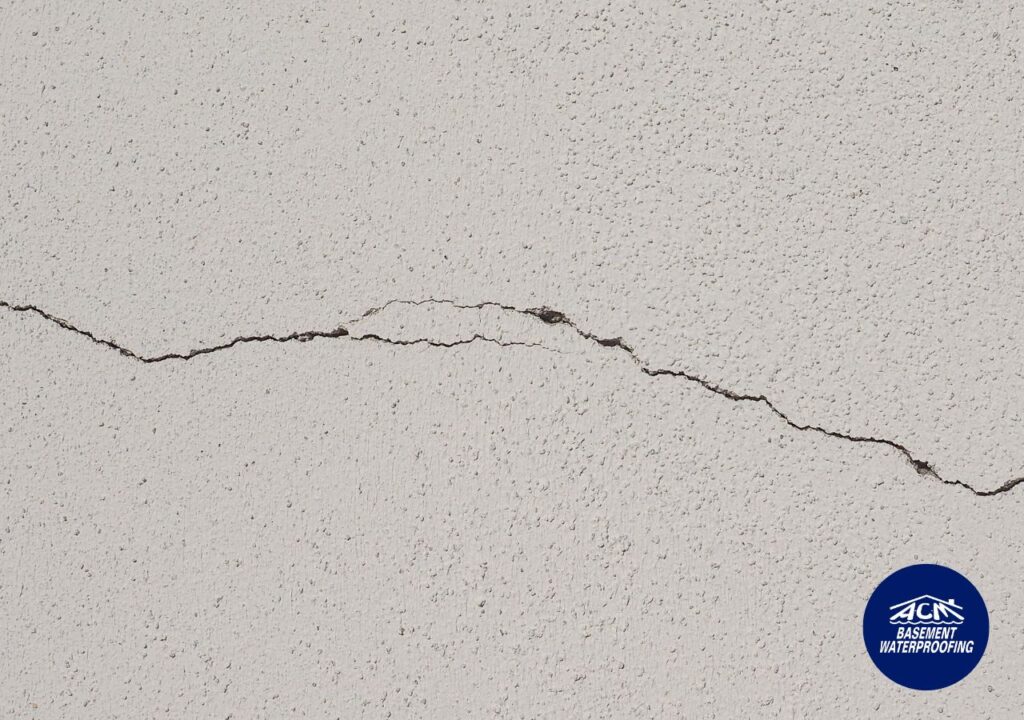
Horizontal cracks run side to side across your foundation wall. They usually show up midway up the wall or along the mortar joints in block foundations, and they form when saturated soil pushes against the wall hard enough to make it flex inward.
This isn’t cosmetic damage. A horizontal foundation crack in a Long island basement means the wall itself is under stress. Around here, that stress typically comes from hydrostatic pressure, poor drainage, or decades of soil pressure building up behind the foundation.
If the crack looks wide or uneven, or if it seems to be getting bigger, structural movement is probably already happening.
Horizontal cracks are more serious than other types of basement wall cracks because they signal lateral pressure against the foundation. The wall isn’t just settling or shrinking, it’s being pushed inward.
Over time, that pressure can cause walls to bow or lean, open gaps between blocks, let water in, and weaken the overall structure. Horizontal cracks are more serious than other types of basement wall cracks in Long Island homes because they signal lateral pressure against the foundation. In Long Island’s wet climate, soil can stay saturated for weeks at a time, which only accelerates the problem. The longer you wait, the harder and more expensive the fix becomes.

Several factors common to Long Island contribute to horizontal cracking in basement walls.
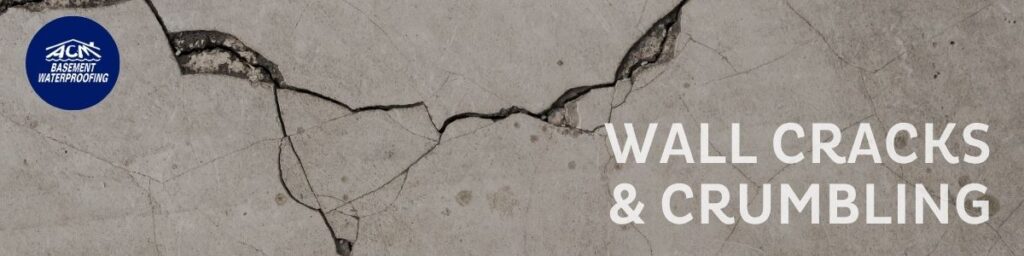
The crack itself is usually the first sign, but there are other clues that your wall may be moving.
Watch for cracks that widen over time, walls that look bowed or curved, or stair-step cracking above or below the horizontal line. Moisture or damp spots along the crack mean water is getting through. And if doors or windows upstairs start sticking, that can point to foundation movement too.
If you’re seeing any of this, it’s time to schedule an inspection with a Long Island foundation repair contractor.
Yes, if you catch them early enough. In most cases, horizontal cracks can be stabilized before the wall fails. The key is acting while the wall is still relatively straight.
The point of repair isn’t just sealing the crack. It’s stopping the wall from moving any further. Cosmetic fixes without stabilization won’t hold up.
We make it simple, affordable, and stress-free — with guaranteed results.
ACM uses carbon fiber wall straps to stabilize horizontal foundation cracks. It’s one of the strongest and least invasive methods available for basement wall repair.
The straps bond directly to the inside of the wall and anchor into the floor and rim joist. Once they’re in place, they stop the wall from bowing any further and provide permanent reinforcement. Most jobs take a single day.
This approach works well for Long Island homes because there’s no need for exterior excavation, the straps take up almost no space, they won’t rust or corrode, and the fix is permanent.
When needed, ACM also seals the crack to keep water out while the carbon fiber system holds everything in place.

Stabilizing the wall is only part of the fix. If you want to keep horizontal cracks from coming back, you have to deal with what is likely causing the pressure in the first place: groundwater pushing against your foundation. That’s a common problem on Long Island, where the water table is high and the soil holds moisture.
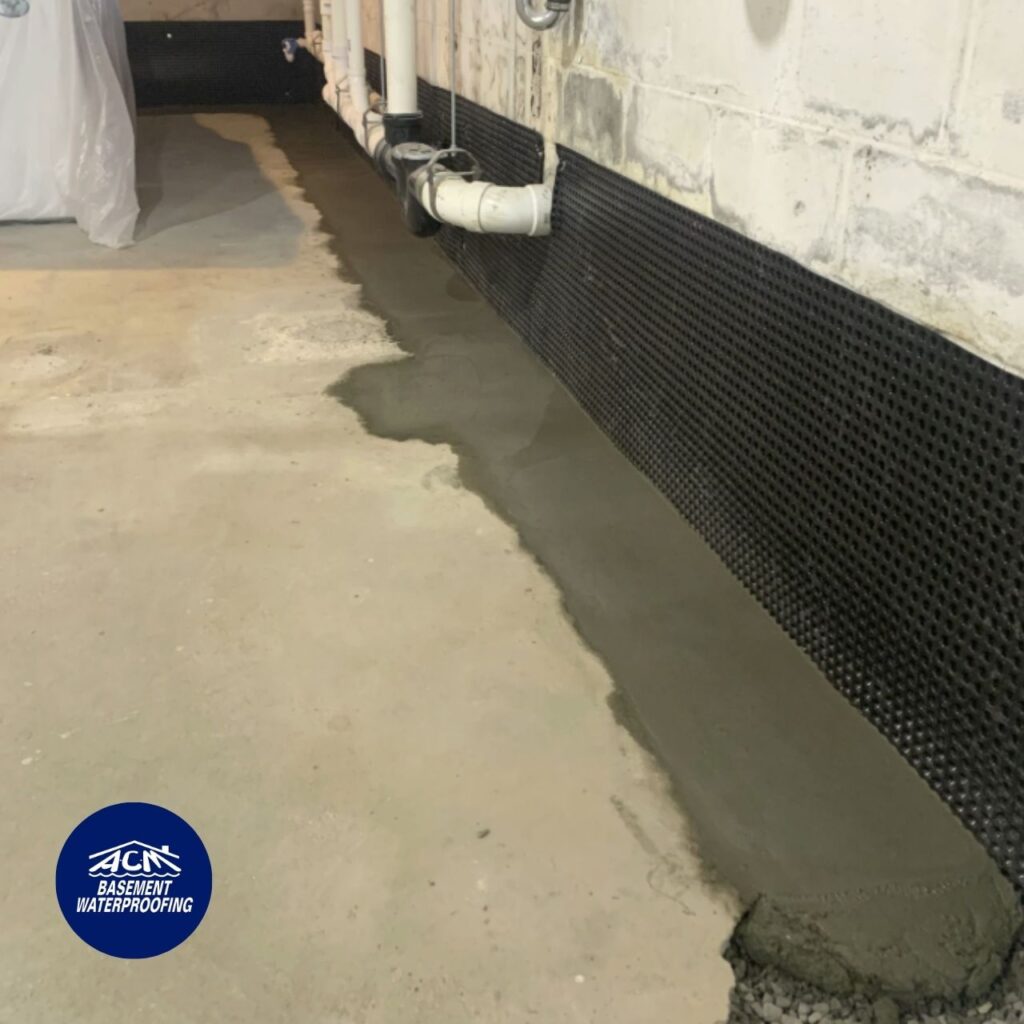
ACM’s interior waterproofing systems manage that pressure from inside the basement. We install a perimeter french drain along the floor that channels water into a sump pump, giving groundwater somewhere to go. Instead of water building up against your foundation and pressing inward, it gets collected and pumped out.
When you combine interior waterproofing with carbon fiber straps, you’re addressing both sides of the problem. The straps hold the wall in place so it can’t bow any further. The drainage system reduces the hydrostatic pressure that caused the bowing to begin with. Together, they protect your foundation and keep your basement dry for the long haul.
Putting off repair almost always makes things worse.
The wall can keep bowing inward until the damage becomes severe enough to require partial reconstruction. If your basement is finished, you may end up with damaged drywall, flooring, and framing. Water intrusion often brings mold and that musty basement smell that’s hard to get rid of.
Addressing the problem early is almost always cheaper and simpler than waiting.
Between the high-water table, clay-heavy soil, and frequent storms, Long Island foundations deal with more hydrostatic pressure than homes in drier regions. Add in aging drainage systems and older foundation designs, and it’s no surprise that horizontal cracking is common across Suffolk and Nassau County.

Are horizontal cracks worse than vertical cracks?
Generally, yes. Horizontal cracks indicate pressure and movement, while vertical cracks are usually just settling.
Can carbon fiber straps actually hold a basement wall?
They can. Carbon fiber is stronger than steel by weight and is designed specifically for this kind of structural reinforcement.
Will the crack disappear after repair?
It can be sealed, but the real goal is stopping movement so the crack doesn’t grow or cause further damage. The crack will likely still be visible, but will longer pose a danger to your home’s foundation.
How much does horizontal crack repair cost?
It depends on the wall size and how much movement has occurred. ACM offers free inspections and straightforward pricing.
Do I need to leave my house during the work?
No. Everything is done inside the basement, and it won’t disrupt your day.
If you’ve noticed horizontal cracks in your Long Island basement wall, ACM can help. Our team will take a look, explain what’s going on, and recommend the right fix for your situation.
We offer free inspections throughout Long Island, including Suffolk County and Nassau County. Call today or request an estimate online.
We make it simple, affordable, and stress-free — with guaranteed results.
*50% Off Materials Discount applicable to new projects over $10,000 *All financing is subject to credit approval. Your terms may vary. Payment options through Wisetack are provided by our lending partners. For example, a $5,500 purchase could cost $253.54 per month for 24 months, based on a 9.9% APR, or $1,833.33 per month for 3 months, based on a 0% APR. Offers range from 0 to 35.9% APR based on amount requested and creditworthiness. Not all merchants and lending partners participate in 0% interest programs. Terms range from 3 - 120 months and may vary based on merchant, lending partner, or transaction size. State interest rate caps may apply. No prepaid finance charges or participation fees. See additional terms at wisetack.com/faqs. Copyright © ACM Basement Waterproofing | All rights reserved. Privacy Policy